eva@dw-al.com
+86 138 388 02090
2026-06-08 02:24:28
The relentless assault of saltwater, humidity, and biofouling in marine environments poses one of the toughest challenges for structural materials. Corrosion not only compromises safety but also leads to costly repairs and downtime. While stainless steel and traditional coated metals have long been used, printed aluminum sheet has emerged as a superior alternative, offering a unique combination of lightweight strength and inherent corrosion resistance. This article examines five distinct ways printed aluminum sheet—particularly solutions from Dawei Aluminum—effectively solves corrosion in marine applications, from yacht hulls to offshore platforms.
Unlike steel that rusts progressively, aluminum instantly forms a dense, transparent oxide layer (Al₂O₃) when exposed to oxygen. This passive film is remarkably stable in seawater, providing a natural barrier against chloride ions that attack other metals. Printed aluminum sheet retains this property because the printing process does not compromise the base metal’s chemistry. In fact, controlled surface treatments can enhance oxide thickness. Dawei Aluminum’s printed sheets are engineered to maintain uniform oxide integrity, ensuring that even after cutting or drilling, the exposed edges quickly repassivate, halting corrosion propagation.
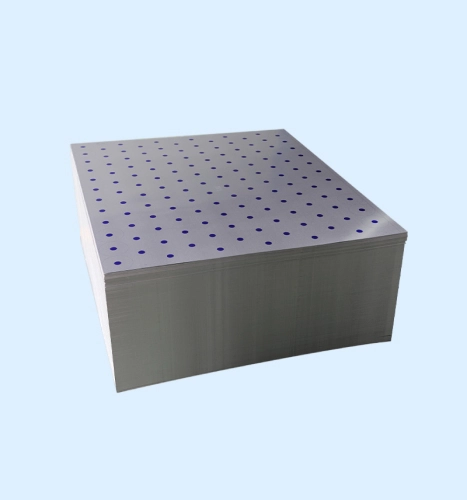
The term “printed” in printed aluminum sheet refers to precision-applied protective coatings—often using roll-to-roll or digital printing methods—that bond at a molecular level. These coatings are not just decorative; they are functional layers that seal the aluminum surface against electrolyte penetration.
Dawei Aluminum applies a patented multi-layer system: a primer with corrosion inhibitors, a base coat containing ceramic microspheres for mechanical strength, and a topcoat with UV-resistant fluoropolymer. This architecture outperforms traditional spray-painted aluminum by providing uniform coverage without pinholes—a common failure point in field-applied coatings.
For hulls and underwater structures, some printed aluminum sheet variants incorporate anti-fouling agents that discourage barnacle adhesion. By reducing micro‑organism attachment, the coating minimizes localized crevice corrosion and keeps the surface clean, lowering drag and maintenance frequency.
In a mixed-metal marine assembly, galvanic corrosion occurs when dissimilar metals are electrically connected in the presence of an electrolyte. Aluminum occupies a specific position on the galvanic series, and printed aluminum sheet can be selectively coated to act as a sacrificial anode or be electrically isolated. Dawei Aluminum offers pre‑applied insulating edge sealants and printed isolation patterns that prevent direct metal‑to‑metal contact with stainless steel fasteners or bronze fittings—a critical advantage for marine engineers designing corrosion‑free joints.

Marine environments subject materials to wave impact, ice abrasion, and thermal cycling (sun to cold sea spray). Printed aluminum sheet excels here for two reasons.
Dawei Aluminum uses 5000‑ and 6000‑series alloys that combine high strength with excellent seawater resistance. The printed coating adheres through chemical cross‑linking rather than mere mechanical interlocking, so it withstands flexing and impact without delamination.
Unlike carbon steel or composite panels, printed aluminum sheet does not suffer from progressive corrosion fatigue. The printed surface inhibits crack initiation, and tests show that after 10 million cycles in simulated seawater, Dawei Aluminum’s panels retain over 90% of their original tensile strength.
While initial material cost may be higher than plain aluminum, printed aluminum sheet delivers savings over the vessel’s service life.
In summary, printed aluminum sheet addresses marine corrosion through a multi‑pronged strategy: inherent passivity, engineered coatings, galvanic control, mechanical durability, and economic efficiency. For naval architects, shipbuilders, and offshore operators, the choice is clear. By partnering with Dawei Aluminum for printed aluminum sheet solutions, you gain access to decades of metallurgical expertise and a product line specifically optimized for the most demanding saltwater environments. Contact Dawei Aluminum today to discuss your vessel or platform requirements and receive a tailored corrosion‑resistant solution.